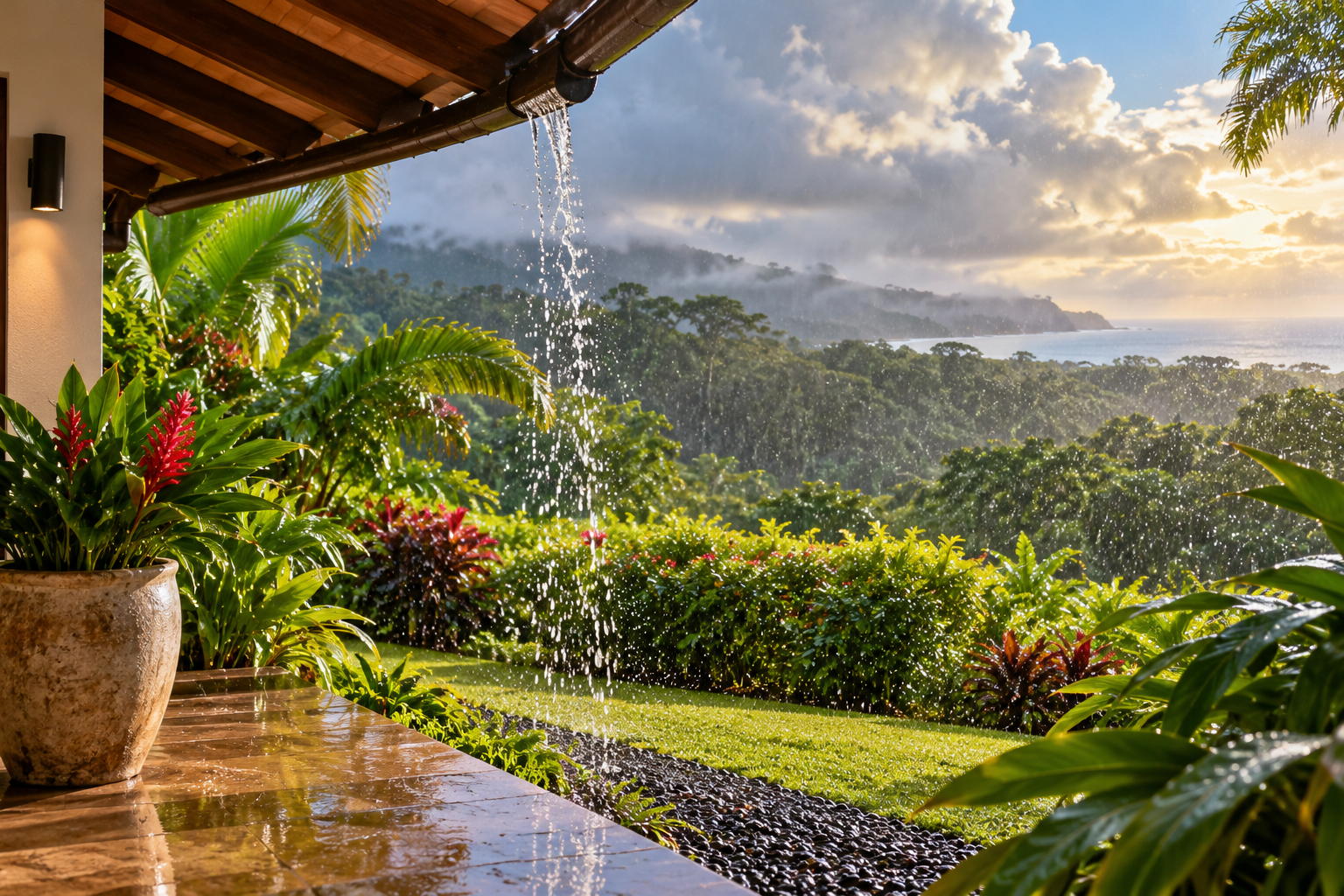
Rainy Season Home Maintenance in Guanacaste: A Practical Checklist for Property Owners
Protect your Guanacaste property during the rainy season with practical tips for drainage, electrical safety, air conditioning, plumbing, and moisture control — for owners and absentee landlords alike.
Owning a home in Guanacaste means enjoying one of Costa Rica's most beautiful regions, but the tropical climate also brings maintenance challenges. During the rainy season, moisture, heavy downpours, drainage issues, and humidity can affect everything from roofing to electrical systems. A little preventive attention can help property owners avoid more expensive problems later.
1. Understanding Guanacaste's rainy season
Guanacaste's rainy season generally runs from May through November, though the timing and intensity vary from year to year and from one community to another. The region is known for its pronounced dry season, but once the rains arrive they can be heavy and sustained, with high humidity that lingers long after a storm passes. Coastal communities such as Nosara, Garza, and Samara can experience noticeably different conditions than the inland hills, so it's worth understanding the local pattern rather than assuming every part of the province behaves the same way.
The combination of intense rainfall and persistent humidity is what makes preventive maintenance so important. Water that finds its way into a roof, a wall cavity, or an electrical conduit can cause damage that's far more expensive to repair than to prevent. A few hours of attention before the rains settle in — and a few simple checks during the season — can protect both the structure and the systems that keep a home comfortable.
2. Inspect roofs, gutters, and drainage
Before and during the rainy season, take a careful look at the roof and the paths water takes away from the house. Look for visible damage — loose or cracked tiles, damaged seams on a metal roof, or debris that has collected in valleys and gutters. Blocked gutters and downspouts are one of the most common reasons water ends up where it shouldn't, so clear leaves, branches, and sediment so rainwater can flow freely.
Walk the property after a heavy rain if it's safe to do so, and watch for pooling water around the foundation. Standing water near a building can seep into walls, damage finishes, and create the conditions where mold takes hold. Keep drainage channels, swales, and the ground around the foundation clear so water moves away from the structure. Roof work and any access at height carry real risk; for anything beyond a ground-level visual check, rely on a qualified professional rather than climbing up yourself.
3. Protect electrical systems
Moisture and electricity demand particular caution. Walk around the exterior and look for water intrusion near outlets, panels, and exterior fixtures — signs of corrosion, discoloration, or water staining are worth investigating. Check that outdoor lighting and any exposed electrical installations are in good condition and properly sealed.
If you notice anything unusual — a breaker that trips repeatedly, a panel that smells burnt, flickering, or warm outlets — stop using that circuit and arrange a professional inspection. The rainy season can bring voltage fluctuations and moisture where it doesn't belong, and the safest response is to have a qualified electrician assess the situation. This isn't a system to troubleshoot with DIY repairs; the risk of shock, fire, and equipment damage is too high.
4. Maintain air conditioning and control indoor humidity
In a warm, humid climate, air conditioning does double duty: it cools the air and pulls moisture out of it. That makes AC maintenance especially important during the rainy season. Keep filters clean and check that the condensate drain line is clear so the unit can drain properly. A clogged drain can back up, leak, and create exactly the kind of damp environment you're trying to avoid.
Watch for condensation on windows and walls, musty odors, and any signs of excessive moisture indoors. Good ventilation helps — use exhaust fans in kitchens and bathrooms, and consider running the AC or a dehumidifier to keep indoor humidity in a healthier range. If the unit isn't cooling efficiently, draining properly, or has developed an odor, it's worth scheduling professional AC servicing rather than waiting for a breakdown.
5. Check plumbing and water management
Heavy rain and saturated ground can put extra stress on a home's plumbing. Look for leaks beneath sinks, around fixtures, and along visible pipes. Check that drains are running freely — a slow drain during the dry season can become a real problem when water use and groundwater both increase.
Pay attention to changes in water pressure and to any signs of water intrusion where pipes enter the home. A dripping faucet or a small leak at a connection is easy to overlook but can cause real damage over weeks of a rainy season. If you spot a leak you can't explain, a pressure change, or water where it shouldn't be, contact a plumbing professional — catching it early is almost always less expensive than the repair it becomes if it's left alone.
6. Prevent mold and moisture damage
Mold thrives where moisture lingers and air doesn't move. During the rainy season, ventilation is your best defense. Open windows when the weather allows, use fans to keep air circulating, and avoid pushing furniture tight against exterior walls where condensation can collect unnoticed.
Watch for early warning signs — a musty smell, discoloration on walls or ceilings, or warping in wood and cabinetry. For homes that sit unoccupied for extended periods, the risk is higher because no one is there to notice. Consider leaving closet doors and interior doors slightly open to keep air moving, and ask a trusted local contact to check the property periodically. Addressing a small moisture problem early prevents it from becoming a larger remediation project later. For a fuller look at keeping a property in good shape between visits, see our guide to caring for a Guanacaste property while you're away.
7. Special considerations for vacation and rental properties
For owners who aren't in Guanacaste year-round, the rainy season rewards a little extra coordination. Schedule periodic property inspections so someone is keeping an eye on the roof, the systems, and the grounds. After a major storm, when it's safe to do so, arrange a check for water intrusion, fallen branches, and any damage to outdoor equipment.
Maintain clear communication with a trusted local contact who can act quickly if something needs attention. Remote ownership works best when maintenance is coordinated rather than reactive — a single point of contact who understands the property and can arrange the right help makes a real difference when a problem shows up between visits.
A simple rainy season maintenance checklist
- Inspect the roof for visible damage and clear gutters and downspouts
- Keep drainage paths and the area around the foundation clear
- Check for pooling water after heavy rain
- Look for water intrusion near electrical outlets, panels, and fixtures
- Inspect outdoor lighting and exposed electrical installations
- Clean AC filters and confirm the condensate drain is clear
- Watch for condensation, musty odors, and excessive indoor moisture
- Check for leaks under sinks and around fixtures
- Confirm drains run freely and note any water-pressure changes
- Ventilate enclosed spaces and keep furniture off exterior walls
- Schedule periodic inspections for unoccupied properties
- Keep a trusted local contact informed and reachable
Much of rainy season maintenance comes down to catching small problems early, and that often means knowing when to call in a professional. Roof work, electrical inspections, AC servicing, and plumbing repairs each call for qualified hands — and for owners who aren't nearby, coordinating all of that from a distance can be its own challenge.
Need help coordinating services for your property? That's where Servicios Guanacaste can help. We act as a single local point of contact for property owners across our service area in Nosara and the surrounding coast, coordinating air conditioning, plumbing, electrical, and other property services through a network of trusted professionals. Rather than finding a different provider for each need, you describe what's going on and we help coordinate the right response — so maintaining your property through the rainy season doesn't mean managing a dozen separate contacts.
When to call a local professional
If you'd like help planning seasonal maintenance or coordinating a service for your property, reach out and we'll help connect you with the right local professionals.